Who is IQM?
IQM is the only national inclusion award in the UK. For over 20 years and in over 20 countries, schools, MATs and Local Authorities use the Inclusion Quality Mark to recognise exemplary inclusive practice.
Get in touch for your FREE school information pack today.
The SENCOs guide to understanding school transition challenges for neurodivergent pupils
May 21, 2026
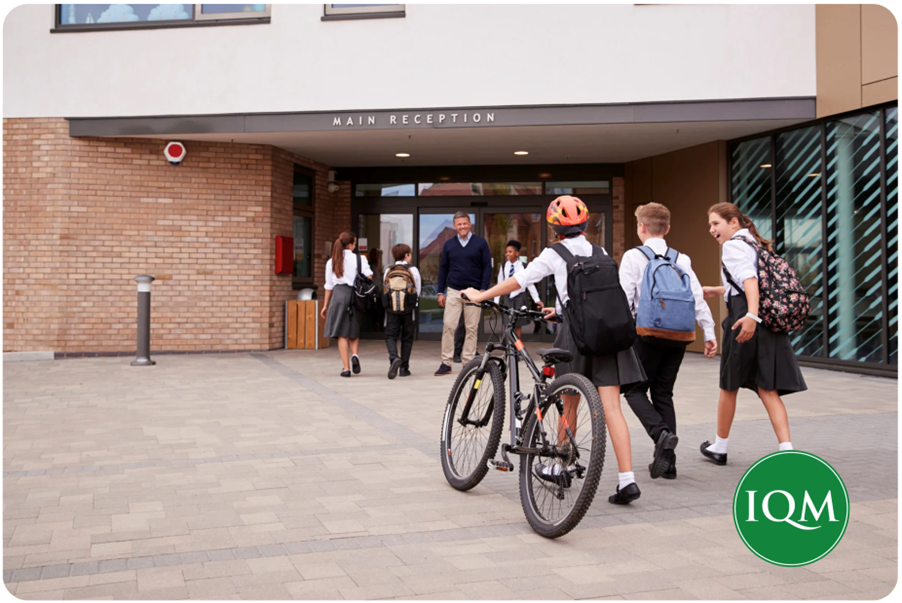
School transition is presented as an exciting milestone. And for most pupils, they’re ready for their next chapter. For neurodivergent (ND) pupils, school transition can be one of the most cognitively demanding periods of their school career and the most (unintentionally) under-supported.
In this blog, we use our 20-plus years of experience, paired with science-backed evidence, to unpick why transition is so challenging for neurodivergent pupils.
It’s a practical guide for SENCOs and leaders to understand what makes transition so challenging for ND pupils, why a one-day approach can’t address it, and what considered planning looks like in practice.
School transition plans and neurodivergent pupils: the friction points
Transition asks the brain to do a lot at once.
New faces, new buildings, new routines, new expectations, all of it needs to be taken in, held in mind, processed and eventually used (correctly).
That work sits with the executive function system: the part of the brain responsible for working memory, cognitive flexibility, planning, emotional regulation and the ability to shift focus between tasks.
For many ND pupils, executive function is the most obvious area of neurological difference.
Research consistently shows that autistic pupils and those with ADHD show significantly more difficulty across executive function profiles than their neurotypical peers, particularly in cognitive flexibility, working memory and inhibitory control.
Of course, this doesn’t mean ND pupils can’t manage large changes like transition, but they do require more effort, conscious thought, strategies, and focus.
The executive function overload
School transition doesn’t just pile new cognitive demands onto a system that’s already working hard. It also removes the infrastructure that neurodivergent pupils rely on to regulate their nervous systems.
- The trusted teacher
- The known routine
- The familiar building
- The academic confidence built over time
These processes and structures were performing active neurological work, keeping the pupil’s threat response calm enough for learning to occur and be retained.
Executive function and nervous system Buckaroo
You may be familiar with the nail-biting toy Buckaroo, where objects are stacked on top until the limit is reached and your heart rate spikes.
When the executive function and regulatory systems are overloaded, it can have the same effect. Although it’s very important to note when limits are reached, the ‘reactions’ can be internal or external.
When transitions occur (primary to secondary, new class teacher, moving from one lesson or task to another, or even a supply teacher instead of the usual class teacher), the brain is being asked to do its hardest cognitive work at the precise moment its support structures have been taken away.
How transition usually runs, and where it falls short
For most pupils, a single transition day in the summer term works well enough.
A visit to their new school or classroom, some get-to-know-you activities, and new teachers plant seeds of familiarity that settle over the summer.
For ND pupils, the same transition day can introduce more unknowns than it resolves.
One day or afternoon in an unfamiliar setting gives the brain new things to process without giving it the repetition, certainty, and time it needs to feel safe.
And that’s not a criticism of the effort schools put in, but a mismatch between what the transition day was designed to do and what ND brains need from it.

Understanding and reducing the barriers
Before we go further, a note on language.
When we refer to neurodivergent pupils here, we mean those with autism, ADHD, dyslexia, dyspraxia, dyscalculia, sensory processing differences and related conditions.
We’re also including pupils with attachment difficulties and trauma histories, because while these aren’t always classed as neurodivergent conditions, they share the same reliance on environmental and relational infrastructure to feel safe enough to learn.
For all of these pupils, transition disrupts the conditions their brains depend on.
Breaking it down: four losses and four unknowns
The barriers ND pupils face at transition can be grouped into two categories.
- The first is loss, the things being taken away that were quietly doing neurological work (relationships, environments, routines and academic identity)
- The second is unknowns, the things the brain now must build from scratch, often with no map to follow (adults, environments, routines and expectations)
Both cognitive and emotional loads are stacked, both draw on the same stretched executive function resource, and neither can be resolved in a single transition day.
The sections below unpick each one and what schools can do to support this during school transitions.

The four losses: what’s being taken away and why it matters
Loss 1: The trusted relationship
What it is: The teacher or key adult the pupil had built a relationship with over time.
What it was doing: That relationship functioned as a neurological secure base, a consistent, predictable adult whose responses helped regulate the pupil’s nervous system and made school feel safe enough to engage with.
For pupils with attachment difficulties, this relationship was structurally necessary. Without it, the nervous system stays on alert.
What to consider for your transition planning:
- Who is the named key adult in the new setting, and has the pupil been introduced to them several times before September?
- Is there a warm handover, time where the outgoing and incoming adults are with the pupil together?
- For attachment-affected pupils, when does relationship-building with the new adult begin? (It needs weeks of consistent contact to take hold, not a single meeting in July)
- Is there a formal acknowledgement of the ending with the outgoing teacher, or does the relationship ‘end’ on the last day of term?
Loss 2: The familiar environment
What it is: The building, classroom, corridors and daily route the pupil already knew well.
What it was doing: A fully mapped sensory landscape that required no new processing. The brain could move through it without scanning for threat, freeing up cognitive capacity for learning rather than vigilance.
Research shows it’s the unpredictability of new sensory environments, rather than the newness itself, that causes the most significant distress for neurodivergent pupils.
What to consider for your transition planning:
- Has the pupil visited the new building when it’s quiet, outside of a busy transition day?
- Do they know the practical routes: entrance to classroom, classroom to toilet and classroom to lunch, before September?
- Has anyone considered the sensory landscape of the new space with this pupil’s specific needs in mind?
- Does the pupil have photographs, a video walkthrough, or a visual map to reduce unknowns over the summer?

Loss 3: The known routine
What it is: The timetable, lesson structure, micro transition points between activities and the unwritten rules of how the school day worked.
What it was doing: A predictive scaffold that told the brain what was coming next.
Most neurodivergent pupils rely heavily on routine to regulate their nervous systems. The predictability signals safety, reduces cortisol and lowers the cognitive cost of simply being in school.
When it’s gone, the brain stays in a low-level threat state, scanning for what comes next rather than settling into learning.
What to consider for your transition planning:
- Does the pupil know what their new provisional timetable looks like before the summer holiday starts? (if not subject-specific, then known daily structures, like break times, form times, etc.)
- Have they had the chance to ask questions about the new routine?
- Is a visual timetable ready from day one in September, or is that something being arranged during the first week?
- Does your September and October transition plan include a lower-demand first week, or does full expectation begin immediately?
Loss 4: Academic identity
What it is: The track record, the adaptations and the accumulated evidence that told the pupil they were capable of managing school.
What it was doing: A self-efficacy framework built over time, proof that they could cope, that adults understood how to support them and that they belonged in the room.
Losing it removes the foundation the pupil was drawing on to get through hard days, and replaces it with uncertainty about whether any of it will still be true.
What to consider for your transition planning:
- Do new teachers know what this pupil’s strengths look like in practice?
- Does the pupil’s own voice travel with them: an All About Me document in their words, or possibly the new ISP formats under the SEND reform updates?
- Are the adaptations and provisions that worked last year confirmed and in place from day one in September? (If you don’t know what they are, then this year is the data collection year)
- Is there a review point in the first two weeks to identify early signs that academic confidence is dipping before it has a chance to spiral and compound?

The four unknowns: what the brain has to build from scratch
Every unresolved unknown is a potential threat signal for a neurodivergent nervous system.
The brain’s response to uncertainty, particularly for pupils with high intolerance of uncertainty, a well-evidenced feature of autism, is to stay on alert until the unknown is resolved.
Summer holidays with unresolved questions aren’t restful. For many ND pupils (and their families), it’s six weeks of a nervous system that can’t fully settle.
The goal of good transition planning is to resolve as many unknowns as possible before September arrives.
Unknown 1: The new adults
What the brain has to do: Build an entirely new relational model (a blueprint of how to trust, interact and feel safe with someone) with no evidence to draw on yet.
For pupils with attachment difficulties, this can’t be rushed. Trust develops through repeated, warm, predictable contact over time. A single introduction in July gives the brain very little to hold onto across the summer holidays.
What it looks like when this isn’t addressed: Wariness, slow engagement, testing behaviour in September that looks like defiance, but is the nervous system checking whether this adult is safe.
What to consider for your transition planning:
- Can the named key adult make contact with the pupil before summer, even briefly?
- Is there a warm handover process where the outgoing adult visibly endorses the new one in the pupil’s presence?
- For high-anxiety pupils, is there any bridging contact across the summer: a postcard, a short video message or a familiar face on day one?
Unknown 2: The new environment
What the brain has to do: Map a completely new sensory landscape from scratch.
Every unfamiliar corridor, every unpredictable space, every new smell and sound level needs to be processed and filed.
Until that mapping is done (factoring in the inconsistency of daily changes), the environment itself carries a background threat signal that stacks on top of everything else the pupil is trying to manage.
What it looks like when this isn’t addressed: Heightened anxiety in the building, avoidance of certain spaces, difficulty settling into learning because the environment itself is still generating vigilance.
What to consider for your transition planning:
- Is there a pre-visit specifically for sensory mapping, separate from the general transition day?
- Does the pupil know where the quieter spaces are and how to access them?
- Has a photo book, video tour or visual map been created and sent home before the summer holiday ends?

Unknown 3: The new routines
What the brain has to do: Rebuild the entire predictive framework (the brain’s internal timetable of what happens and when) for the school day.
Until a new routine becomes familiar enough to feel automatic, the brain is working hard just to keep up with what’s happening next. That cognitive load is running constantly in the background, leaving fewer resources for actual learning.
What it looks like when this isn’t addressed: Difficulty with transitions between lessons, anxiety around changes to the timetable, apparent disorganisation that’s the brain struggling to hold new structures in working memory.
What to consider for your transition planning:
- Has the new timetable been shared with the pupil and family before the summer holiday?
- Has the pupil had a chance to ask questions about how the day will run?
- Is the first week of September predictable and lower in demand, giving the new routine time to become familiar before full expectation begins?
Unknown 4: New expectations
What the brain has to do: Reconstruct a sense of academic competence (the feeling they can do something and knowing how to succeed) in an unfamiliar setting, with a teacher who doesn’t know them yet, facing demands that may look very different from last year.
Research shows self-esteem and academic self-concept dip significantly at transition points for most pupils. For neurodivergent pupils starting from a more fragile baseline, that dip can be steep, and change quickly if the new environment doesn’t feel safe enough to try.
What it looks like when this isn’t addressed: Refusal, shutdown, challenging behaviour disguising anxiety about competence.
What to consider for your transition planning:
- Have new teachers been briefed on what this pupil looks like when they’re doing well, beyond what challenges look like?
- Are early opportunities for success being built deliberately into the first two weeks?
- Is there a clear, low-barrier way for the pupil to communicate that they’re finding something hard, before it escalates?

What good SEND transition planning looks like in practice
There are common threads that tie all the losses and unknowns together: asking thoughtful questions earlier and being proactive with adaptations and support.
Put simply, what does this pupil need in place before September so that their brain can feel safe enough to learn?
That question gets better answers when the pupil has a voice in the process. When parents and carers are consulted and kept informed throughout. When the new teacher meets the pupil before September, they’re armed with knowledge of their strengths and needs.
Most importantly, schools that understand the value of planned transition demonstrate that it’s consistently understood across the whole school as a process that starts before July and continues into the first months of term, rather than an event that gets ticked off in a day.
How IQM works with schools on inclusion
IQM has spent over 20 years working alongside schools to develop, recognise and celebrate the kind of inclusive practice that’s built into the fabric of how a school operates.
The IQM Inclusive School Award gives SENDCos and school leaders an Evaluative Framework for assessing whole-school inclusion, with tangible evidence of where inclusive practice is strong and where there’s room to grow.
Schools working towards IQM Awards build the habits of reflection and whole-school consistency that make a real difference to SEND pupils year-round, including at the moments that matter most, like transition.
Find out more about how IQM works with schools.
Found this transition guide useful? Share it with your network. Effective transition planning starts with the right understanding and knowledge.
More articles you’ll like:
8 themes every inclusive classroom has in common
Inclusion and AI: Is this finally the end of ‘one-size-fits-all’ teaching?
Other Posts



About IQM
The only national award for inclusion in the UK, IQM has been committed to recognising exemplary inclusive schools for over 20 years and in over 20 countries around the world. The three awards allow schools and organisations to celebrate their inclusive practice against nationally recognised framework.
Site Links
© 2026 Inclusion Quality Mark | website developed & cared for by digidoda