Who is IQM?
IQM is the only national inclusion award in the UK. For over 20 years and in over 20 countries, schools, MATs and Local Authorities use the Inclusion Quality Mark to recognise exemplary inclusive practice.
Get in touch for your FREE school information pack today.
8 themes every inclusive classroom has in common
March 25, 2026
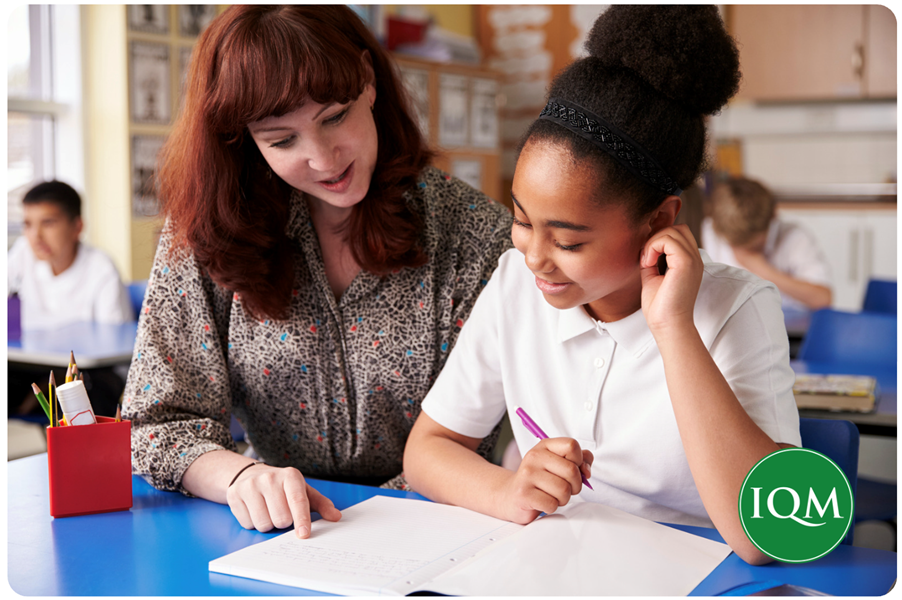
There’s no universal checklist for creating an inclusive classroom. What you’ll find, however, are common themes in classrooms designed to be inclusive.
At its core, an inclusive classroom is purposeful. It’s designed around the pupils it serves, adapting to meet changing needs whilst holding high expectations for every pupil.
In this blog, we’ll walk you through the 8 themes every inclusive classroom has in common, whether you’re teaching reception, leading a secondary department, supporting a class as a TA, or developing provision across a whole school or trust.
The key to sustainable inclusive change
There are improvements you can make to your classroom today that will have an immediate impact. A calmer display, a clearer routine, a conversation with your TA about agreed approaches and language.
But for inclusive practice to be sustainable, it can’t rest on a single motivated teacher doing their best for their class in isolation. It must be a whole-school priority.
IQM works with schools through an 8-element Evaluative Framework, helping them identify what’s working well and where the development areas are across whole-school provision.
If you’re thinking about where your school sits across the themes below, that framework is a useful place to start.
Here are the 8 areas you’ll find evidence of in every inclusive classroom.

1. Classroom environment
The room itself sends a message before lessons begin. For many pupils, particularly those with sensory needs, neurodiversity or SEMH, the physical environment can either help or hinder their capacity to concentrate and engage in planned learning.
An inclusive classroom considers light (harsh fluorescent lighting is a common and easily overlooked barrier), noise from corridors or the school kitchen, visual busyness on walls and surfaces, and whether the layout allows pupils to move safely and independently, as a minimum.
It also asks whether the room feels like it belongs to the children in it.
- Can they see their work celebrated?
- Do they feel represented and part of a community?
Tips to improve your learning environment
- Reduce display clutter and keep walls purposeful rather than decorative
- Arrange furniture so pupils can access resources independently without having to ask
- Create a calm space that’s available to everyone, not just pupils who are struggling
- Be mindful of sensory triggers beyond the obvious (smells from nearby spaces, flicker from screens and noise from outside the room all have an impact)
2. Routines and transitions
For many pupils, the barrier isn’t learning but the uncertainty around it.
Children with autism, ADHD and SEMH needs can spend so much energy anticipating what’s coming next that there’s very little left for the lesson itself.
Routines reduce that cognitive load.
Helped by simple strategies like having a consistent lesson opener, a visual timetable visible to the whole class and Now and Next boards for those who prefer a tighter structure, all give pupils something predictable to hold on to.
Transitions deserve the same attention. Moving between tasks, between teachers and between school events like the lesson-to-breaktime handover can all be high-risk moments.
Every adult working with a child should know what the plan is for those moments, not just the class teacher.
Tips to improve routines and transitions
- Keep key anchors in every lesson, so pupils know what to expect when they walk in
- Map the transitions in a typical school day and identify which are frequently the hardest for your most vulnerable pupils
- Share transition plans with every adult involved, including lunchtime staff

3. Teaching, curriculum, and feedback
Quality First Teaching (QFT) sits at the heart of every inclusive classroom. Under the proposed SEND reform changes, QFT will form the Universal Level of support every pupil is entitled to.
True inclusive teaching means all pupils have access to the same ambitious content.
The scaffolding, pacing and format might change, but the expectation doesn’t.
Chunked instructions, multiple ways to respond and deliberate planning for how pupils will access the learning rather than what they’ll do differently from everyone else are the markers of inclusive curriculum planning.
Many schools are now using AI tools to help further inclusive practice.
Assessment and measuring progress
If your methods of measuring progress only work well for pupils who can write quickly and respond under pressure, you’ll miss a significant proportion of what your SEND pupils know and can do.
Verbal feedback, practical demonstration, photographs and peer assessment all provide valid evidence of learning.
Feedback needs to be in a format the pupil can use. Written comments work well for some children and not at all for others. With advancements from technology, we’re moving away from the one-size-fits-all methods of teaching and assessment.
Tips to improve teaching and assessment
- Offer multiple ways to respond to tasks (verbal, visual, written, practical application)
- Match your feedback format to the pupil, not just the task
4. Language
How adults use language in a classroom is part of what makes the environment inclusive.
A child with a Pathological Demand Avoidance (PDA) profile, for example, responds very differently to a demand than to a choice. “Come and sit down”, and “Would you like to sit on the carpet or at your table?” can produce different outcomes from the same child.
Schools that understand the power of language move from managing behaviour to understanding it.
This matters school-wide, too. A shared understanding of language and communication, used consistently by everyone from the class teacher to the lunchtime supervisor, is one of the most powerful tools a school has.
Speech, Language and Communication Needs (SLCN) is the most common type of SEN Support need in England. That means in all classrooms, there will be children whose language skills are below their chronological age.
Vocabulary displays, word mats, visual prompts and careful, unambiguous explanations are good practice for everyone.
Tips to improve language and communication
- Reduce verbal instructions and pair them with something visual
- Build processing time in after asking a question
- Audit the language used by all adults in your school, not just in lessons

5. Adult support
Not all classrooms have the luxury of multiple adults available for support. But if you do have TAs and additional adults, then the deployment of their skills and time is essential to running an inclusive classroom effectively.
The shared understanding of roles and aims also applies to PPA cover, supply teachers, wet-play supervisors, and lunchtime staff.
For pupils who rely on routine and consistency, an unexpected change in an adult can derail an entire day. An inclusive classroom has plans for these moments.
Co-regulation is worth naming here, too. When a pupil is dysregulated, they need a calm adult to help them find their way back. That’s a skill that can be taught, and it should be part of any school’s CPD and training plans.
Tips to improve adult support
- Brief your TA on lesson objectives and their role before the lesson starts
- Build handover information for supply staff and cover supervisors into your SEND systems
- Develop co-regulation skills across all adults who work with your most vulnerable pupils to help emotionally regulate
6. Pupil voice and agency
In a structured mainstream system, giving pupils agency over their learning can feel difficult. But children who can name what helps them, ask for it, and self-advocate are far better placed to access the curriculum independently over time.
This is about developing self-awareness, metacognition and the confidence to use both. It doesn’t happen quickly, but it starts with small and consistent opportunities.
This might look like
- Pupils contributing to their own support plans or pupil passports (eventually this will be known as the Individual Support Plan or ISP)
- Children choosing how they present or record their learning within the scope of the task
- Regular check-ins that ask, “What helped today?” and act on the answers
- Staff modelling their own thinking and learning strategies out loud

7. Culture and behaviour
An inclusive classroom has a culture deliberately built, not inherited. A class charter developed with pupils, where everyone contributes the values they want the room to represent, creates a sense of shared ownership that’s impactful in creating your own micro-community within your classroom.
When behaviour is presenting as challenging, an inclusive classroom comes from a position of calm curiosity first.
Mental health needs, trauma, anxiety and unmet SEND can all present as ‘difficult’ behaviour.
Asking what a behaviour is trying to communicate, rather than focusing only on how to control it, flips from reacting to responding.
Tips to build culture and address behaviour inclusively
- Develop a class charter with your pupils at the start of the year
- When a pupil is dysregulated, lead with curiosity (what does this behaviour tell you about an unmet need?)
- Audit your school behaviour policy to see whether it reflects this thinking or relies primarily on sanctions
8. Relationships
Relationships are the foundation that every other theme in this blog rests on. The relationship between a teacher and a pupil, between a TA and the children they support, and between pupils themselves all shape whether an inclusive classroom is experienced as safe.
Part of that is helping pupils to navigate friendships and manage conflict in healthy, collaborative ways. Lifelong skills that don’t develop without being taught and practised.
The SEND reform consultation paper has highlighted the need for schools to monitor how well pupils belong, with belonging and school engagement to be a core part of provision by 2029.
Tips to strengthen relationships
- Build relationship time into your classroom day
- Create structured opportunities for pupils to practise conflict resolution and collaborative problem-solving
- Use pupil voice to understand which children feel least connected to their peers or to school

An inclusive classroom is designed to be the place where a child finds their feet, builds their confidence and discovers what they’re capable of. That micro-community of a classroom (the one you build through the eight themes above) becomes the foundation for how pupils experience school and ultimately how they see themselves as learners.
How IQM works with schools
The Inclusion Quality Mark is the only national award for inclusion in the UK, working with over 6,500 schools across mainstream, special, independent and international settings.
IQM’s 8-element Evaluative Framework helps schools assess their inclusive practice across all areas of provision, celebrate what’s working and build a clear, evidence-based plan for improvement.
To find out more about joining IQM’s family of Inclusive Schools, request a free school information pack.
More articles you’ll like:
What school leaders need to know about the 2026 schools white paper
Supporting children with ADHD in the classroom
Ofsted 2025: What the New Framework Means for Inclusion and SEND
Other Posts

About IQM
The only national award for inclusion in the UK, IQM has been committed to recognising exemplary inclusive schools for over 20 years and in over 20 countries around the world. The three awards allow schools and organisations to celebrate their inclusive practice against nationally recognised framework.
Site Links
© 2026 Inclusion Quality Mark | website developed & cared for by digidoda