Who is IQM?
IQM is the only national inclusion award in the UK. For over 20 years and in over 20 countries, schools, MATs and Local Authorities use the Inclusion Quality Mark to recognise exemplary inclusive practice.
Get in touch for your FREE school information pack today.
My AuDHD child’s first year of secondary school: The 5 main support gaps we found
September 7, 2026

This article has been 12-months in the making. We share a firsthand account from a parent of a child with Autism and ADHD navigating the first year of secondary school.
Highlighting 5 key areas of unmet needs, we share examples of how small moments of disconnect created pressure for this pupil and their family. The examples detail the impact this had on mental health, wellbeing and attainment.
This blog shares the firsthand insights most SENCOs and teachers don’t hear until unmet needs reach a crisis point; it aims to help school staff better support neurodivergent pupils during transition.
Article background
This insight highlights how small but stacked moments of missed support shape the pupil’s attainment, well-being, and sense of self.
The pupil’s school is not an IQM school, and this isn’t a critique of any single setting.
The examples below of where a pupil’s SEND needs haven’t been understood and met aren’t unusual. In fact, they’re among some of the most overlooked, especially in neurodivergent pupils who are quiet, rule-following, and unlikely to signal when something isn’t working.
About the pupil
Academic profile
- Worked at greater depth across all core subjects at primary school
- Significantly above-average CAT and baseline assessment scores
- Exceptional attendance record
- Completed Year 7 at a large mainstream secondary school
SEND Profile
- Diagnosis of Autism and ADHD (AuDHD)
- Significant executive functioning challenges
- Finds social communication challenging and is reserved with staff
- Has an Individual Education Plan (IEP)
Context
- Moved from a small primary school to a large secondary school
- Travels to school via school bus
- Family is supportive and knowledgeable about SEND and the school system
Five areas of unmet need: Insight from a SEND parent
The five areas below draw on a full academic year of experiences shared by this pupil’s family. Not every moment was difficult, and where practice worked well, those examples are included as well, because they show what’s possible when a need is noticed and responded to.
Understanding the pupil’s needs
A recurring theme throughout the year was the gap in teachers’ knowledge surrounding AuDHD and how this can present. Many of the challenges arose because of teachers interpreting disorganisation as a behavioural choice rather than understanding the executive-function strains placed on the pupil.
For a pupil with AuDHD, many of the difficulties that surfaced weren’t signs of disengagement or lack of effort. But a direct expression of their profile in a new and demanding environment was often misunderstood.
Executive functioning, not carelessness
Moving from a small primary to a large secondary means navigating multiple teachers, rooms, timetables and expectations in the same day. For a pupil with significant executive functioning challenges, that cognitive load is considerable before any learning has taken place.
Over the course of the year, the pupil misplaced a long list of personal belongings:
- Multiple coats
- Pairs of trainers
- School-branded PE kit
- Socks, hats and water bottles
- Pencil cases and their contents
- Exercise books
In PE specifically, difficulty keeping track of kit led to repeated issues, missing equipment, attending the wrong activity, and the additional financial cost of replacing lost items.
Individually, each incident can be incorrectly misinterpreted as carelessness. Across a full year, it was an indicator of unmet needs in an environment that hadn’t yet put practical supports in place.
The end-of-year report
The end-of-year report identified organisation, focus and talking in class as areas for improvement. Each of these is a recognised characteristic of ADHD.
Naming them as shortcomings, without reference to the pupil’s diagnosis or to any strategies being used to support them, doesn’t reflect the pupil’s effort or potential, and can quietly affect the way a pupil understands themselves.
Sensory awareness and assessment readiness
During baseline assessments in the first week, the pupil was handed headphones without being shown how to adjust the volume. A sudden loud audio prompt caused significant distress mid-assessment.
For a pupil with sensory sensitivities, an unmanaged sensory experience during a formal assessment directly impacts their performance on the test and, therefore, their predicted attainment grades for the year.
Homework and curriculum coherence
Homework is already a significant challenge for many neurodivergent pupils (and their families). When an authorised absence due to instrumental tuition meant the pupil missed lesson content, they were still expected to complete the related homework independently, with no catch-up process in place.
For a pupil already managing significant executive functioning challenges, being set work on content they haven’t received isn’t a gap they can reasonably bridge alone.
The IEP process
As you’ll know, it’s essential that pupils and their families are central to the provision planning process, including the creation and updating of an Individual Education Plan (IEP). The pupil was removed from class without warning to complete the pupil voice section of their IEP. Already uncomfortable with anything that marked them as different from their peers, they found the experience distressing.
During the pupil voice discussion, targets carried over from primary school were shared with the pupil for the first time, including references to friendship difficulties that had deliberately never been disclosed to them before. The pupil came home that evening dysregulated, leaving the parent to contact the school to find out why.
The IEP had not been shared with, or contributed to by, the family at any point during the year. Whether the mandatory move to digital Individual Support Plans (ISPs) in the coming months will help connect parents with schools more will be seen over time.
When the right response made the difference
When a teacher sanctioned the pupil for not bringing their workbook to class, the parent contacted the teacher to explain the difficulty. The book was found in the classroom, the sanction was removed, and the teacher agreed to keep it stored safely going forward. The adjustment worked as soon as the need was understood.
A similar response was given when the pupil arrived late one morning, presenting as unwell. Pastoral staff contacted the parent, discussed what they were seeing, and agreed it was likely anxiety.
The pupil spent the rest of the day in the inclusion base, regulated, and stayed in school.
School-home communication with parents
When a family is engaged, informed, and actively trying to support their child, a clear line of communication with school matters. For this family, that line was often harder to access than it needed to be.
Access to school systems
Weeks into the school year, the family still didn’t have working access to the school’s online information platform. For a pupil with significant executive functioning challenges, that system is a key layer of scaffolding.
Without it, the family had no way to check homework, upcoming lessons, or communications during the period when they were most needed.
The pupil, not the parents
Secondary school naturally directs communication toward the pupil, and that’s appropriate in many contexts. But it assumes a level of self-management not every Year 7 has developed.
Tasking a pupil with AuDHD with the responsibility of relaying logins, instructions, and key updates home without supportive resources means important information frequently doesn’t arrive. Not through unwillingness, but because the process doesn’t account for the working memory required to remember and relay information.
Parents’ evening
For families of children with additional needs, parents’ evening is a structured opportunity to discuss not just academic outcomes, but the experience behind them.
This school operates using online appointment systems, like many other secondary schools. The limited 6-minute teacher slots were released and filled within minutes.
The short conversations they did have focused on surface-level outcomes, with feedback centred on things like reading questions more carefully, and little exploration of how ADHD and executive functioning difficulties were shaping their school day.
For a family trying to build a fuller picture of how their child was really getting on, that format didn’t provide it.
Transport and unfamiliar drivers
The journey to and from school is rarely considered part of ongoing transition planning, but for a pupil navigating an unfamiliar bus route independently for the first time, it’s one of the day’s first challenges.
When an unfamiliar bus driver questioned this pupil’s travel arrangements at the bus stop, the parent had to intervene and publicly explain their child’s diagnosis on the spot.
For a pupil who already finds unexpected social situations difficult, being challenged by a stranger about something they couldn’t easily explain themselves was both distressing and embarrassing.
Unknowns: systems, processes and environment
Moving from a small primary to a large secondary school means the environment itself becomes a daily source of uncertainty. It’s why the environment is one of the four losses and four unknowns effective transition planning covers.
- Locating the toilets
- Finding the right room
- Knowing which entrance to use
These can look minor from the outside but add up quickly for a pupil already managing a high cognitive load in an unfamiliar setting.
The bus system
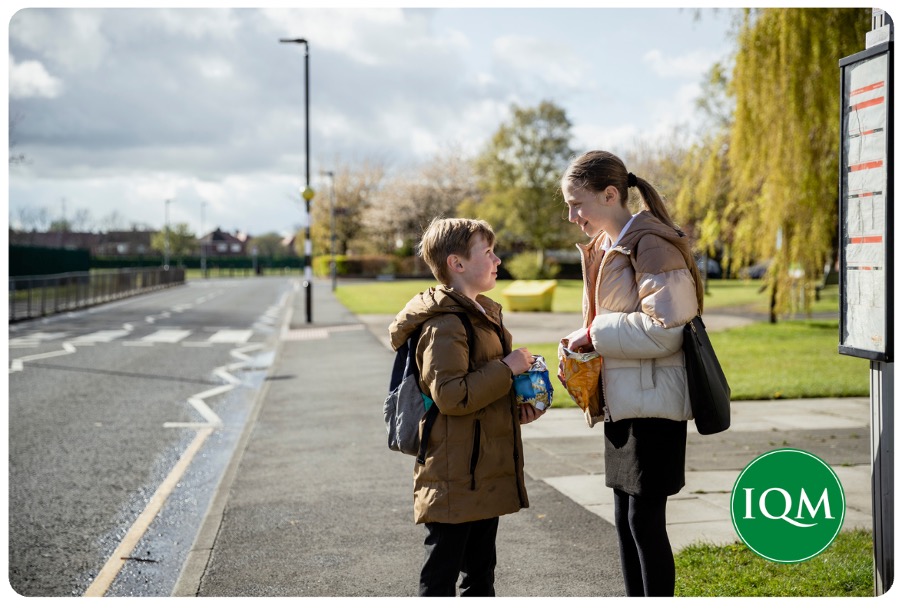
On multiple occasions, the pupil failed to board the correct bus despite waiting at the stop and repeatedly missed their designated stop on the way home, requiring adult help.
The bus route is often treated as something a pupil will simply figure out. For some pupils, additional support and practice in unplanned situations is essential for safety and wellbeing.
Navigating the social world
The unwritten rules of secondary school social life, including how to communicate in peer group chats, aren’t taught anywhere. It’s often forgotten that it’s the parent’s first time navigating the world of secondary school and teenagers, too.
This pupil found the complex social network that comes with making new friends difficult and was excluded from messaging groups after comments that came across as blunt or overly literal.
For an autistic pupil, that invisible rulebook is an isolating unknown. It’s an area that falls in the overlap of home and school and is something many schools run workshops on to offer parents the guidance and support they’re looking for.

Academic identity and belonging
A pupil’s sense of who they are academically and whether they belong in a school community is continually shaped throughout the year. For this pupil, a series of small but stacked experiences across the year quietly impacted both.
The gap between potential and outcome
This pupil began Year 7 with significantly above-average CAT scores and target grades well above expected standard. They ended it working in line with expected standard.
Research consistently shows that SEND pupils are disproportionately likely to see a dip in academic outcomes during secondary transition, and for some, that dip becomes the new baseline.
Attendance and anxiety
Anxiety in neurodivergent pupils doesn’t always look like school refusal. It can look like a child pushing through illness repeatedly because missing school feels more threatening than attending while unwell.
Wanting to maintain perfect 100% attendance, the pupil pushed through periods of illness during the autumn term, attending school when they were unwell rather than risk falling behind.
The determination to attend school on the surface looked like commitment and resilience, but if the underlying driver is fear and anxiety, this starts an unhealthy pattern of ignoring signs to rest and recover, a common challenge for individuals with ADHD.
How reward systems can misfire
End-of-year reporting showed the pupil had received a below-average number of positive points (the school’s behaviour management system) and some negative points for homework and organisation. Often negatively identifying traits associated with their AuDHD diagnosis as shortcomings.
A reward and sanction system that doesn’t account for a pupil’s SEND profile can leave a record that reads as disengaged, when the reality is the system isn’t always built with SEND needs in mind.
Adapting rather than accommodations
This pupil has settled into secondary school, made a good group of friends and continues to mostly enjoy attending. That’s a reflection of their own resilience and enthusiasm for learning, and it signals that they’re adapting to secondary school life.
But should it be the pupil who adapts to parts of the school process that don’t accommodate SEND needs?
The small, stacked moments of disconnect impact how pupils feel understood and their sense of belonging in their new school environment.
The academic identity
When a neurodivergent pupil changes schools, the internal structures that support learning, the trusted adults, the known routines, the familiar environment, all must be rebuilt.
How a pupil sees themselves academically can shift during that process, particularly when the feedback they receive doesn’t account for their diagnosis.
This pupil ends Year 7 working within expected standard, which is below their target grades. Monitoring whether the gap between potential and outcome closes in Year 8, and staying curious about what’s driving underperformance, will be a whole-school responsibility.

The themes to take away from a parent’s perspective
The themes that emerge from this family’s year aren’t unique to this pupil or this school. They reflect the kinds of gaps most likely to go unnoticed in neurodivergent pupils who are compliant, motivated and outwardly settled.
Across the year, the following needs were consistently unmet or met only partially:
- Transition planning that accounts for the full SEND profile, including transport and environment
- Explicit teaching of new systems and routines rather than assumed independence
- Understanding of executive functioning as SEND, not a behavioural issue
- Consistent reasonable adjustments across all subjects and staff
- Meaningful communication between school and home, particularly around the IEP
- Recognition of the social and emotional demands of secondary school for autistic pupils
- Early pastoral response when anxiety begins to show
- Provision that identifies strengths alongside needs, and reads behaviour in the context of diagnosis
For SENCOs: consideration questions
Some practical points to consider:
- Do all staff who teach a pupil with SEND have a working understanding of their profile, not just access to it?
- Does your homework and independent task approach account for executive functioning needs and missed content?
- Do parents of pupils with SEND have a direct route into school beyond a six-minute parents’ evening slot?
- Are IEPs built with pupils and their families?
- Is your reward and sanction data being read in the context of individual SEND profiles?

How IQM supports SENCOs to achieve whole-school inclusion
IQM is the only national award for inclusion in the UK, supporting schools across more than 20 countries in developing and sustaining quality inclusive practice.
The IQM Inclusive School Award gives schools a structured framework to evaluate inclusion across the whole school. Through self-evaluation, external IQM assessment, and ongoing support from the IQM team, schools build a clear picture of where inclusion is working and where improvement gaps exist.
For SENCOs, the IQM process provides a structure for achieving the kind of consistency this parent perspective would have benefited from:
- Staff understanding of SEND profiles
- Communication with families
- Consistent reasonable adjustments
Find out more about the Inclusive School Award and how the IQM process works.
Other Posts




About IQM
The only national award for inclusion in the UK, IQM has been committed to recognising exemplary inclusive schools for over 20 years and in over 20 countries around the world. The three awards allow schools and organisations to celebrate their inclusive practice against nationally recognised framework.
Site Links
© 2026 Inclusion Quality Mark | website developed & cared for by digidoda