Who is IQM?
IQM is the only national inclusion award in the UK. For over 20 years and in over 20 countries, schools, MATs and Local Authorities use the Inclusion Quality Mark to recognise exemplary inclusive practice.
Get in touch for your FREE school information pack today.
What KHDA Inspectors are Looking for Under the New Model
September 13, 2026
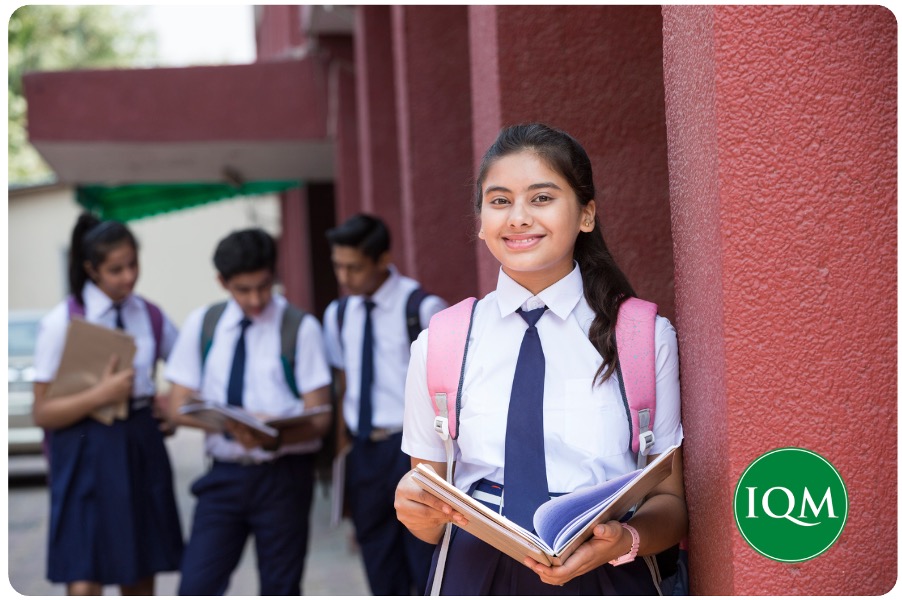
The return of KHDA inspections this September brings several changes for schools to get used to.
The new model of inspections marks a shift in how quality is defined for schools across Dubai, one that sits within the wider ambitions of the Education 33 strategy and Dubai’s plan to be recognised among the world’s leading education systems.
At the heart of this sits a simple aim: every child in Dubai should have access to a high-quality education, whatever their starting point or their needs.
This article shares what school improvement elements KHDA inspectors are looking for under the new model, and what needs to be embedded in daily practice rather than prepared for ahead of inspection week.
The change in KHDA inspection focus
KHDA confirmed in June 2026 that quality assurance visits would resume for Dubai’s private schools from the 2026-27 academic year, following a two-year pause.
What hasn’t changed:
- The observation and evidence methods themselves: Lesson observations, staff and student conversations, document review, tracking pupil progress, are still how inspectors gather evidence during a visit.
- KHDA is maintaining its existing inspection framework and evaluation standards.
What has changed:
There’s a number of changes to visit logistics and the overall direction they’ll take.
- Notice period, reduced from five working days to no more than 24 hours.
- The SEF’s role.Under the old system, schools submitted their Self-Evaluation Form ahead of a scheduled visit. The pre-submission window no longer exists in the same way now that notice is so short.
- Visit structure.Two distinct visit types now exist, a full inspection and a shorter monitoring visit, rather than one standard inspection model.
- The focus of the assessment.Previously, inspection judged performance largely as a snapshot on the day. For 2026-27, KHDA has said quality assurance activities will specifically evaluate the impact of schools’ improvement efforts over the two-year pause, what schools did with the time, and what difference it made, rather than judging a single visit in isolation.
The shift in the focus of the visit changes how schools will prepare for their KHDA inspection.

What KHDA inspectors are looking for now
Every school and school group runs differently, shaped by curriculum, community and context. But across Dubai’s private schools, common threads run through what high-quality provision looks like, and KHDA’s updated approach is designed to see exactly that.
IQM’s Sarah Linari summarises the change in strategic focus for the visits:
‘KHDA has been clear that the aim is to gain “a more accurate picture of teaching quality, learning experiences and student wellbeing” by seeing schools as they really are.
This change places greater emphasis on school culture, consistency and long-term impact.
Rather than judging how well a school prepares for an inspection, inspectors will be looking at how effectively systems, relationships and classroom practice operate on a day-to-day basis.’
Sarah Linari, Executive Lead for School Improvement for IQM
There are several key strategic elements your KHDA inspectors will want to see, all evidencing long-lasting commitment to school improvement:
- Whole-school ownership of improvement
- Culture of belonging and inclusion
- Systems and processes
- Sustainable quality and improvement
- Consistency
- Strong working relationships
- Proactive support
Whole-school ownership of improvement
The strongest schools commit to ongoing improvement, anchored around the priorities driving the Education 33 strategy:
- Empowering Emirati learners
- Accessible and equitable education for every child’s wellbeing
- Engaging educators and parents in lifelong learning
- Positioning Dubai as a world-class education destination
- Building an innovation-led system
Whole-school ownership means these priorities sit across every team, not only with a single department or a handful of enthusiastic staff.
Systems and processes are shared, often shaped with input from external experts brought in to strengthen the school’s impact on its pupils. A visible, shared culture of improvement runs through each department, so the same expectations show up in every classroom.
Inclusive education is a clear example. It’s everyone’s responsibility to deliver, but the structures that make that possible, tracking, training, shared accountability, are something leadership must put in place.
Culture of belonging and inclusion
A culture of belonging shows up in how a school understands and meets each child’s needs, removing the barriers that stand between a pupil and their learning. That understanding sits inside how lessons are planned, how staff talk about pupils, and how the wider school community treats difference.
This is what KHDA looks for in a successful school, evidence that belonging is part of daily practice rather than something planned to prove it’s a priority for an inspection visit.
Systems and processes
KHDA will be looking for evidence that successful outcomes are predictable for every child, built on robust, evidence-based systems.
That predictability comes from leadership cascading a culture of improvement through the school, often shaped with input from external experts, so every member of staff understands the improvement priority and has access to something that works.
IQM’s Executive Lead for School Improvement, Kevin O’Neill points to self-evaluation and improvement planning as two of the systems that demonstrate a school with strong development fundamentals, alongside systems to guarantee inclusive pedagogy, effective leadership, student wellbeing and high-quality teaching.
A structured self-evaluation process starts with identifying real strengths, then being honest about what still needs work. That honesty is what builds the confidence to talk inspectors through stories of repeatable success, because the school already knows its strengths and gaps.
‘Short-notice inspections will quickly reveal whether systems are genuinely embedded, whether staff share a common understanding of expectations and whether leadership priorities are consistently reflected in classroom practice.’
Sarah Linari, Executive Lead for School Improvement for IQM
Sustainable quality and improvement
A school that prioritises sustainable quality builds practice robust enough to hold steady through staff changes, promotions and new appointments, because the culture and systems sit with the school rather than with any individual.
Getting there depends on a fine balance between two things, support and challenge.
- Support secures the culture, the systems and the whole-school buy-in that make improvement possible in the first place, giving staff the confidence and consistency to embed new practice properly.
- Challenge does the opposite job. It comes from external, expert eyes that can identify where there’s still room to grow and set the next improvement priorities.
Neither works well without the other. Support without challenge can cause stagnation of progress and challenge without support can create pressure without the foundation to act on it.
Consistency
Consistency is one of the areas most likely to run against preparation practice followed under the previous inspection model. Preparing to showcase a curriculum’s strongest work, the best lesson, the most polished display, is understandable: Schools want inspectors to see the full scope of what they offer.
But KHDA’s shift to short notice means what’s on show has to be what’s there every day, not a curated version of it. Consistency asks whether that same standard holds across every phase, subject and classroom.
Upskilling leadership across every phase is what closes that gap, so expert practice reaches every part of the school rather than sitting with those most confident.
Strong working relationships
Relationships can be harder to evidence than a system or a policy. But the proof sits in the provision itself. When staff know a child well, and know their family and their learning preferences, then universal provision becomes tailored provision without needing an additional layer of intervention.
Every child benefits from a depth of understanding, not only those already flagged as needing support.
Relationships with other schools
The same applies across a wider educational network, other IQM schools, specialist services, professional bodies.
Strong relationships mean information and advice is shared and acted upon before a problem grows. There is expertise available beyond what any one school holds internally, schools committed to long-term sustainable change utilise this.

Proactive support
The strongest Dubai schools are proactive rather than reactive, noticing developing needs among pupils, families and staff and putting support in place at the earliest opportunity.
Schools that draw on the systems, support and challenge already covered are best placed to demonstrate the quality of education their pupils receive. Embedding systems that notice a developing need early and utilise external challenge to keep asking whether current practice is following best practice.
High-quality CPD and connection with other schools feed best practice directly. Staff who stay close to current practice and hear how other schools approach similar challenges are better placed to notice and act on a developing need, in pupils, families or staff. That proactive culture of improvement also plays into staff retention, area inspectors are interested in.
What KHDA want to understand is the strategic direction behind a leaders’ decisions, rather than whether a familiar process has been followed.

How IQM supports Dubai school leaders
School leaders in Dubai are rarely short of ambition, what they often need is a trusted, external perspective to help make sense of what they’re already doing well and robust frameworks to help identify the areas that can be developed.
The IQM International Inclusive Award process offers a balance of support and challenge.
IQM’s Kevin O’Neill, who has led schools through inspection both with and without IQM in place, describes the shift as:
“Schools often begin their IQM Award journey thinking about accreditation and inspection readiness. What many discover is that the greatest value comes from the professional dialogue, external challenge and honest reflection that develops along the way.
Leaders gain a clearer understanding of their strengths, greater confidence in explaining their provision and sharper insight into the areas that will make the biggest difference to children moving forward.”
Kevin O’Neill, Executive Lead for School Improvement for IQM
For school leaders across Dubai’s British, American, IB and Indian curriculum schools, this is about building the sustainable inclusion systems and culture that place every learner at the centre of your strategic decisions.
If you’d like to understand more about how this works for your school:
- Request IQM’s free international school information pack, or
- Read more about how IQM works with international schools.
More articles you’ll like:
How AI in Education is making inclusive practice possible in 2027
Celebrating Inclusive Education Across the Middle East
Staff induction plans for middle and senior leaders in schools
Other Posts




About IQM
The only national award for inclusion in the UK, IQM has been committed to recognising exemplary inclusive schools for over 20 years and in over 20 countries around the world. The three awards allow schools and organisations to celebrate their inclusive practice against nationally recognised framework.
Site Links
© 2026 Inclusion Quality Mark | website developed & cared for by digidoda