Who is IQM?
IQM is the only national inclusion award in the UK. For over 20 years and in over 20 countries, schools, MATs and Local Authorities use the Inclusion Quality Mark to recognise exemplary inclusive practice.
Get in touch for your FREE school information pack today.
Inclusion and AI: Is this finally the end of ‘one-size-fits-all’ teaching?
January 22, 2026

During the industrial age, schools were designed to churn out workers for specific jobs. All children learned the same thing at the same time because that’s what was needed for the economy.
The old deal was that if you sat still and learned the facts, you were rewarded with a secure job for life.
We have a better understanding of complex needs and of pedagogy and purposeful learning, paired with greater accountability to prepare pupils for a life full of opportunities and demands inconceivable 100 years ago.
But, how do we ensure inclusive practice is achieved in schools with a system built on the concept of standardisation?
The concept of the ‘one-size-fits-all’ is being challenged by everyone. Ofsted changes, upcoming SEND reforms, and a curriculum review on the horizon all signal an intention to move away from a standardised approach to teaching.
In this blog, we explore how AI tools might be the key to unlocking inclusive practice for schools. Positively impacting pupils’ outcomes in the short term and with sustainability in mind.
The high cost of holding it all together
We’re trying to meet complex SEND needs using an education system designed for a much simpler time. The result is a system that often relies on teachers, SENDCos and school leaders bridging the gap with their own goodwill.
Time is the one resource we can’t buy
We know that many staff work from early until late and over weekends just to keep things running.
Time is the only resource that additional funding simply can’t buy back. It’s finite, and it’s currently being spent on processes that haven’t changed in decades.
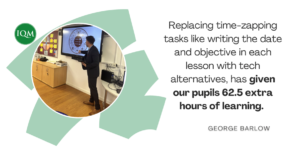
This is where smart technology comes in. Take Belgrave St Bartholemew’s Academy as an example. The leadership team at Belgrave Academy has embedded AI tools into their daily routines, saving teachers 7.5 hours of admin time per week (adding up to over 23% of their directed teaching time a year!)
Principal George Barlow and Digital Learning Lead Ricky Bridge shared in our recent article about AI and inclusion as a partnership how they use a 1:1 iPad approach to shift their focus back to high-value interactions with pupils rather than drowning in paperwork.
Schools don’t exist in a bubble
Education sits within a wider ecosystem of health and social care services that are facing the same immense capacity pressures. The sheer volume of need has grown as our understanding of neurodiversity and complex needs has deepened.
Some innovative leaders are finding ways to embed inclusive practice through contextual autonomy, making their curriculum and school systems adaptable to achieve inclusion. But quality inclusion mustn’t rely on a postcode lottery or a specific leader’s ambition for change.
Inclusive practice and systems must be a workable baseline for every school.

Change that’s happening now
As we wait for the latest SEND reform white paper to be released, schools aren’t waiting around for the lengthy legislative change process to prioritise inclusion for their most vulnerable pupils.
Innovative leaders from schools, local authorities and Multi-Academy Trusts are switching from searching for more hours in the day to using systems to utilise the resources more effectively.
Starting with a whole-school approach to inclusion that prioritises celebration of what already works in context and uses external expert eyes to highlight the areas left to develop.
Is AI the fuel for the new era?
It’s important to be realistic, using AI to embed inclusion isn’t an overnight ‘fix’. The team at Belgrave Academy began their technology journey in 2019, leaning on experts in the field to get it right.
To use AI tools to enhance inclusive practice, there must first be a strong culture of inclusion across the school. Successful Inclusive Schools are all working towards the same goal: improved outcomes for pupils.
How AI is making inclusive practice possible
We know that the old industrial model is struggling to keep up with modern needs. This is where AI in schools steps up to offer an alternative. It’s helping leaders and teachers move away from standardisation and towards a model that flexibly fits pupils’ needs.
Reducing teacher workload
High-quality inclusion costs time. In the past, differentiation meant planning three different lessons for one class. Using AI for SEND pupils and lesson planning cuts that time down significantly.
It handles the heavy lifting of resource creation so teachers can focus on the children, while still keeping the accountability and direction of the learning with the teacher.
Personalisation at scale
One-size-fits-all usually means teaching to the middle and adapting to support and extend either side. AI increases the possibility and scope of resources every child can access, without the manual preparation time.
It means pupils can access learning independently (something we know SEND pupils often forfeit to access additional support).
Giving pupils independence
Technology gives pupils more than one way to access learning. They can use video, images, audio, or simplified text to understand a concept.
It gives them the tools to help themselves rather than waiting for an adult to support further, pausing their learning whilst the teacher tries to support many at the same time.

Reducing the stigma of support
When inclusion and AI come together it changes the classroom dynamic. If everyone is using technology to access their work, then pupils with high needs don’t ‘stand out’ in ways they may prefer not to.
It becomes a universal offer, with support as the baseline rather than something only a few pupils have access to.
Retaining quality teachers
We mentioned the time saved at Belgrave Academy earlier, but the impact goes deeper than just hours. Staff there have said they wouldn’t want to work in a school that didn’t use this approach because it would feel like going backwards.
When teachers feel supported and have a manageable workload, they are much more likely to stay.
A supportive friend, not a replacement
Many worry that by introducing AI in schools, it might threaten to replace quality teacher input. For George and his team at Belgrave Academy, the reality is the opposite.
George and Ricky describe it as a ‘digital buddy’ that sits alongside you rather than trying to take over.
It takes on the data processing, the scheduling, and the resource hunting that usually eats into teacher planning time. Freeing teachers to focus on the human parts of the job, like building quality relationships and understanding the nuances of a child’s behaviour and barriers to learning and wellbeing.
How IQM supports schools to move forward
Technology is powerful, but it’s only as effective as the culture in which it sits. You can’t build a future-facing inclusive school without a solid understanding of where you stand today.
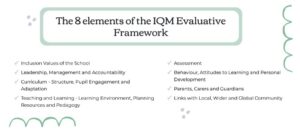
This is where the Inclusion Quality Mark (IQM) comes in. We provide the evaluative framework that helps schools move past the ‘one-size-fits-all’ mindset. Our evaluative framework gives leaders a clear picture of their strengths and the specific areas they need to develop.
For schools like Belgrave Academy, the IQM award wasn’t just a school award. It was the roadmap that helped them embed inclusion across their school. We were thrilled to award them the Centre of Excellence status, recognising their sustained inclusive practice.
IQM’s accreditation process helps capture evidence of what’s working and provides the expert feedback you need to drive sustainable progress.
Ready to leave the industrial era behind?
If you are ready to strengthen your school’s inclusive culture, we are here to help you take the next step.
Request your free school information pack and start your journey to becoming an IQM accredited Inclusive School.
More articles you’ll like:
How AI in Education is making inclusive practice possible in 2026
Ofsted 2025: What the New Framework Means for Inclusion and SEND
Other Posts


About IQM
The only national award for inclusion in the UK, IQM has been committed to recognising exemplary inclusive schools for over 20 years and in over 20 countries around the world. The three awards allow schools and organisations to celebrate their inclusive practice against nationally recognised framework.
Site Links
© 2026 Inclusion Quality Mark | website developed & cared for by digidoda